


Video Telematics & Dashcams: The Complete Guide to Visual Fleet Intelligence
Introduction
There is a category of fleet incidents that telematics data alone cannot fully resolve. The data tells you that an event occurred, where it occurred, and how the vehicle was being driven. What telematics data alone cannot do—show exactly what happened in the seconds that determined the outcome—is where video telematics adds value. Visual evidence transforms ambiguous data into irrefutable fact.

Understanding the Camera Types
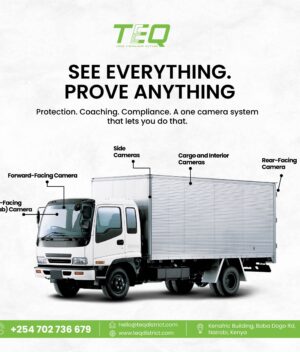
Forward-Facing Camera: (The Baseline) This is the foundational component of any commercial fleet. It records the environment ahead of the vehicle continuously—resolving fraudulent claims, documenting unavoidable emergency stops, and capturing the precise behavior of other road users in the critical seconds before impact.
Driver-Facing (In-Cab) Camera: (The Safety Coach) This camera monitors the driver’s cabin to provide a complete picture of risk. In AI-enhanced systems, it analyzes behavior in real time to detect fatigue, distraction, mobile phone use, and seatbelt compliance. As the most privacy-sensitive component, it requires the most transparent pre-deployment communication with your team.
Rear-Facing Camera: (The Dispute Resolver) This camera provides the definitive record of the environment behind the vehicle. By capturing the seconds leading up to a collision, it provides irrefutable evidence in rear-impact disputes and serves as a vital reversing aid. For urban operations involving frequent backing manoeuvres, this is an essential tool for eliminating “he-said, she-said” liability and reducing low-speed property damage.
Side-View Cameras: (The Blind-Spot Shield) Standard for heavy vehicles and passenger transport, side-view cameras provide critical visibility in high-risk zones. By capturing activity in the vehicle’s traditional blind spots, they protect vulnerable road users like cyclists and pedestrians. These cameras are no longer just an “extra”—they are a core requirement for meeting safe-system compliance and regulatory obligations in many jurisdictions.
Cargo and Interior Cameras: (The Guardian of Assets) These cameras provide essential chain-of-custody and security functions for high-value goods, temperature-sensitive cargo, and passenger transport. By documenting every moment inside the vehicle, they ensure the integrity of the “last mile”—protecting both the driver and the assets. This is the industry standard for cash-in-transit, healthcare logistics, and school bus operations, where passenger safety and cargo security are non-negotiable.
How AI Event Detection Works
Modern video telematics solutions utilize machine learning models trained on millions of hours of fleet footage to continuously analyze camera feeds. These systems trigger automated responses the moment specific “event signatures” are detected—transforming raw video into actionable intelligence.
Commonly Detected Events:
- Collision and Impact: Accelerometer data synced with visual confirmation.
- Forward Collision Warning: Monitoring following distance relative to speed.
- Lane Departure: Detecting lane markings crossed without an active indicator.
- Distraction & Fatigue: Identifying gaze deviation, microsleep indicators, and phone use through AI object recognition.
- Compliance: Real-time visual detection of seatbelt status and smoking.
- Harsh Driving: Accelerometer triggers paired with concurrent video recording.
The Workflow: (From Incident to Inbox) When an event is detected, the system automatically captures a 15–30-second clip centered on the trigger moment. This footage is instantly uploaded to the platform, tagged with the driver ID, vehicle, location, and event classification. The fleet manager receives a notification and can review the irrefutable evidence from any device within seconds. For a 50-vehicle fleet, the total daily review time is streamlined to under 15 minutes.
Using Video for Driver Coaching
Footage transforms the quality of the coaching conversation. A data report showing 14 harsh braking events can be dismissed as “bad road conditions,” but a 15-second clip of a driver tailgating at motorway speeds is irrefutable. This visual specificity shifts the dialogue from subjective criticism to objective, factual coaching—achieving a level of productivity that data alone rarely reaches.
A Structured Video Coaching Session:
Follow-through: Progress is tracked in the next scoring period, and improvements are explicitly recognized.
Selection: Manager reviews AI-flagged clips to identify 2–3 instructive examples.
Recognition: The session opens by acknowledging overall performance and recent improvements.
Observation: The driver watches the clip without immediate commentary.
Reflection: The driver provides their own perspective on what occurred.
Alignment: A specific, measurable behavior target is agreed upon.
Selecting the Right Configuration
The Single-Channel Configuration: The Baseline
The 1-channel, forward-facing camera serves as the foundational “minimum viable” setup for any commercial fleet. By providing continuous loop recording and automated event uploads, it secures the essential evidence needed for baseline insurance and liability protection. This configuration is the ideal entry point for fleets requiring a reliable, high-impact solution to resolve “he-said, she-said” disputes and provide immediate clarity in the event of an incident.
The Dual-Channel Configuration: Active Risk Management
The recommended setup for mixed operations utilizes a combination of forward and driver-facing cameras to provide a 360-degree view of risk. By integrating AI event detection with standard telematics, this configuration moves beyond simple evidence collection into the realm of active prevention. It is the ideal solution for fleets focused on driver development, as it pairs vehicle data with real-time visual context—allowing managers to identify and correct high-risk behaviors like fatigue and distraction before they escalate into incidents.
The Multi-Channel Configuration: Total Operational Visibility
For high-value or high-risk operations, a full multi-camera deployment—incorporating forward, driver-facing, rear, and side-view units—provides the ultimate layer of protection. This configuration utilizes AI detection across all angles and features live-streaming capabilities integrated with driver identification systems. It is the gold standard for cash-in-transit, hazardous materials, and passenger transport, where absolute accountability, safe-system compliance, and the security of both personnel and cargo are non-negotiable.
Conclusion
Video telematics and dashcams represent the most visible and immediately impactful layer of fleet intelligence. The ROI is rapid, the data is measurable, and the effect on organizational risk is well-documented. A fleet operating without cameras is not running lean—it is running unprotected.
| TEQ District supplies and deploys camera systems for commercial fleets of all sizes. Our team will recommend the right configuration for your specific operation. Start at https://teqdistrict.com/ or call +254702736679. |