


How Telematics Is Transforming the Mining and Logistics Sector in Africa

Africa’s mining and logistics sectors sit at the heart of the continent’s economic growth. From mineral extraction and bulk haulage to cross-border trade and last-mile delivery, these industries operate in some of the most challenging environments in the world.
Yet, many fleet and operations managers are still making critical decisions with limited visibility.
This is where telematics is changing the game.
The Visibility Challenge in African Operations
Mining and logistics fleets across Africa face unique operational realities:
- Remote and harsh terrains
- High fuel costs and fuel theft risks
- Driver safety concerns
- Equipment downtime and reactive maintenance
- Limited real-time data for decision-making
Without accurate, real-time insights, inefficiencies compound quickly—leading to lost revenue, increased risk, and reduced asset lifespan.
Telematics bridges this gap by turning vehicles, heavy machinery, and mobile assets into connected, intelligent systems.
What Telematics Really Delivers (Beyond GPS Tracking)
Today, telematics goes far beyond knowing where a vehicle is.
In mining and logistics operations, telematics enables:
1. Real-Time Asset Visibility
Fleet managers can monitor vehicle location, utilisation, idle time, and route adherence across multiple sites, whether underground, on-site, or in transit.
2. Fuel Monitoring & Cost Control
Fuel is one of the largest operating expenses, accounting for over 30% of daily operational costs. Telematics helps detect abnormal fuel consumption, siphoning, and inefficient driving behaviour, directly aiding in saving operational costs.
3. Predictive Maintenance for Heavy Equipment
Instead of waiting for breakdowns, telematics provides insights into engine health, fault codes, and service intervals, reducing downtime and extending asset life.
4. Improved Driver Behaviour & Safety
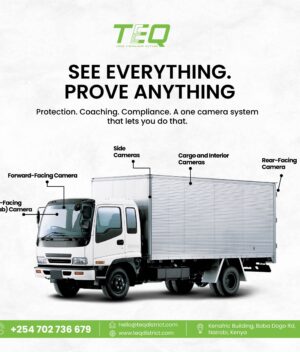
Through driver behaviour analytics, video telematics, and AI-powered systems (ADAS & DMS), operators can reduce accidents, improve compliance, and enhance overall road safety. Video telematics can also be applied extensively for driver coaching to promote better driver behaviour.
5. Operational Accountability
From shift management to trip validation and proof of work completed, telematics introduces transparency across operations, critical for large, distributed teams.
Why This Matters Specifically for Africa
Africa’s mining and logistics sectors are growing fast. However, growth without strategy and data driven intelligence leads to inefficiency.
Telematics supports:
- Scalable operations across regions and borders
- Data-driven decision-making instead of assumptions
- Risk reduction in high-value, high-risk operations
- Compliance and reporting for insurers, partners, and regulators
As infrastructure improves and digital adoption accelerates, telematics becomes a competitive advantage, not just a nice-to-have.
The Role of AI & Video Telematics
The next evolution is already here.
AI-powered telematics solutions now enable:
- Driver fatigue and distraction detection
- Collision warnings and incident reconstruction
- Automated risk scoring for insurance and compliance
- Smarter dispatching and route optimisation
For mining and logistics operators, this means safer sites, lower insurance exposure, and stronger operational control.
Moving From Blind Decisions to Operational Intelligence
Every minute without visibility is a risk especially in industries where assets are expensive and downtime is costly.
Telematics empowers African operators to:
- See more
- React faster
- Operate smarter
And ultimately, build resilient, future-ready operations.