
Driver ID Hardware · Buyer's Guide

We Have the Best Option for You.

Answer 4 quick questions and we'll match you to the right keypad setup for your fleet — instantly.

✓ No sign-in required · no account · no commitment

Selection 1 of 4
Question 1 of 4
What vehicles or assets are you managing?
Question 2 of 4
How should it be installed?
Question 3 of 4
What level of driver authentication do you need?
Question 4 of 4
How important is fleet standardization?
Your best option

View Full Comparison ↓
Driver ID Hardware · Buyer's Comparison

Two Driver-ID Setups.
One Clear Choice for Your Fleet.

Both solutions solve the same core problem — identifying the driver before a trip begins and linking every journey, event, and immobilization action to the correct individual. The difference lies in how each system is installed, how the keypad communicates with the tracker, and the level of operational standardization required across your fleet.

Which Driver Identification Setup Fits Your Fleet?

Answer four structured questions to determine whether your operation is best suited for a wireless BLE Driver ID system (FMB920) or a hardwired 1-Wire Driver ID system (FMB130).

Picker Tell us about your fleet

Select one option per question. You can change your answers any time.

What type of vehicles or assets are you managing?
How should the system be installed?
What level of driver authentication do you require?
How important is fleet-wide standardization?

How Each Solution Works

The driver identification flow behind each setup, from PIN entry to authentication.

A
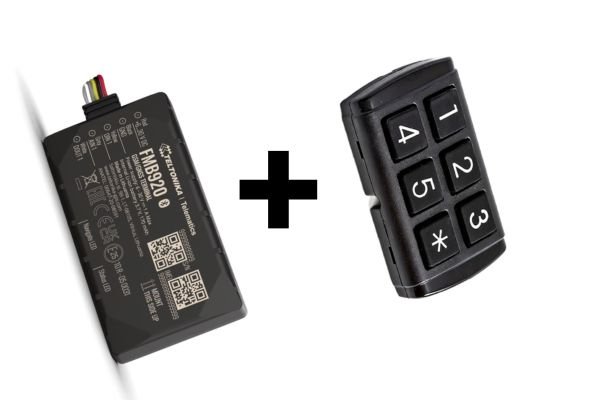
FMB920 + BLE 5-Digit Keypad (Wireless Setup)

The driver enters a 5-digit PIN on the keypad. The keypad sends the Driver ID wirelessly to the FMB920, which validates the driver and links all subsequent trips and events to that identity.

Key Operational Benefits
  • No keypad signal wiring required
  • Faster installation across multiple vehicles
  • Flexible placement anywhere within the cabin
  • Reduced installation complexity
B
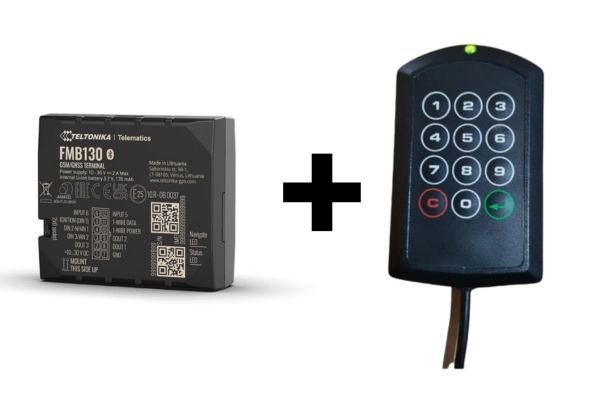
FMB130 + 1-Wire 10-Digit Keypad (Hardwired Setup)

The driver enters a 10-digit PIN on the keypad. The keypad transmits the Driver ID through a dedicated wired interface to the FMB130, which authenticates the driver before trip activity is recorded.

Key Operational Benefits
  • Stronger authentication through longer PIN structure
  • Permanent installation suited for long-term fleet deployments
  • Easier standardization across large fleets
  • Designed for structured maintenance and diagnostics

Side-by-Side Comparison

Every meaningful difference between the two driver identification philosophies, organised by category.
Feature
★ Your Match
A
Wireless Flexibility Model
FMB920 + BLE 5-digit keypad
FMB920 + BLE Keypad
★ Your Match
B
Structured Fleet Control Model
FMB130 + 1-Wire 10-digit keypad
FMB130 + 1-Wire Keypad
Driver PIN Length
5 Digits
10 Digits ✓ more combinations
Driver Authentication Strength
Standard
Enhanced ✓ stronger
Installation Complexity
Low ✓ simplest
Moderate
Dashboard Wiring
Minimal ✓ minimal
Permanent hardwired installation
Mounting Flexibility
High ✓ flexible
Dependent on wiring route
Fleet Standardization
Good
Excellent ✓ excellent
Device Interoperability
Limited to BLE-compatible implementations
Widely supported across the Dallas / 1-Wire ecosystem ✓ wide support
Vehicle Immobilization
Supported via relay after valid driver authentication
Immobilization Flexibility
Suitable for basic vehicle cut-off control
Supports more structured control logic in fleet deployments ✓ structured
Driver Feedback
Built-in keypad buzzer ✓ included
External buzzer support where required
Installation Time
Faster deployment with fewer components ✓ faster
Longer installation due to wiring requirements
Long-Term Serviceability
Simplified maintenance due to fewer physical connections
Strong structured support for long-term fleet standardization ✓ structured
Typical Applications
Cars, vans, light commercial vehicles
Construction, mining, agriculture, heavy-duty fleets

Which Setup Should You Choose?

Use these summaries to make the final call based on your specific operational needs.

A
Choose FMB920 + BLE Keypad if…
  • You need fast installation with minimal vehicle downtime
  • Dashboard wiring should be kept to a minimum
  • Flexible keypad placement is important
  • You operate cars, vans, or light commercial fleets
  • A standard 5-digit driver PIN is sufficient
B
Choose FMB130 + 1-Wire Keypad if…
  • You require a permanent, hardwired installation
  • Fleet standardization is a priority across all vehicles
  • You want stronger driver authentication using a 10-digit PIN
  • Your operations require long-term serviceability and structured diagnostics
  • You operate industrial, construction, mining, or heavy-duty fleets
TEQ District

For most light commercial and passenger fleets, the FMB920 + BLE keypad offers the most efficient deployment with fast installation and minimal disruption. For structured enterprise fleets and industrial operations requiring stronger driver accountability, the FMB130 + 1-Wire keypad remains the preferred long-term solution. Talk to us about which fits your operation.

Talk to an Expert →